
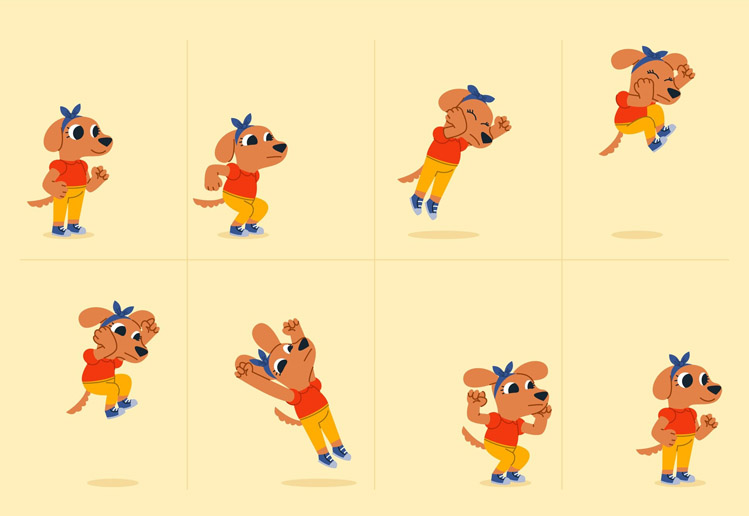
Animation, the art of creating moving images, has captivated audiences for over a century. From classic cartoons to cutting-edge visual effects, animation plays a vital role in entertainment, advertising, education, and more. Within this dynamic field, two primary approaches stand out: 2D and 3D animation. Each offers unique strengths and artistic possibilities, catering to diverse creative visions and project requirements.
2D animation, the traditional form of animation, involves creating movement in a two-dimensional space. Think of beloved classics like “Snow White” or “The Simpsons.” In this realm, characters and objects are drawn or painted on flat surfaces, and sequential images are displayed rapidly to create the illusion of motion.
- Traditional Animation: Animators draw each frame by hand, a meticulous process requiring immense skill and patience.
- Digital 2D Animation: Utilizing software like Adobe Animate or Toon Boom Harmony, artists create and manipulate images digitally, streamlining the animation workflow.
- Cut-out Animation: Characters and objects are created from flat materials and manipulated frame by frame, as seen in “South Park.”
2D animation excels in its ability to create expressive characters with stylized designs. It often evokes a sense of nostalgia and can be more cost-effective than 3D animation for certain projects.
3D animation revolutionized the field by introducing depth and realism. Popular films like “Toy Story” and “Avatar” showcase the immersive power of this technique. 3D animators work within a virtual three-dimensional space, creating models and manipulating them over time.
- Modeling: Creating digital representations of characters, objects, and environments using specialized software like Maya or Blender.
- Rigging: Building a digital skeleton for 3D models, enabling animators to control their movements.
- Animation: Manipulating the rigged models over time, defining their motion, expressions, and interactions.
- Rendering: Generating the final two-dimensional images from the 3D scene, a process that can be computationally intensive.
3D animation shines in its capacity to produce lifelike visuals, complex camera movements, and intricate details. It’s widely used in films, video games, and architectural visualization.
While 2D and 3D animation offer distinct aesthetics, they are not mutually exclusive. Many projects blend the two techniques to achieve unique visual styles. For instance, a 3D animated film might incorporate 2D elements for special effects or stylized sequences.
Both 2D and 3D animation continue to evolve, driven by technological advancements and artistic innovation. Virtual reality (VR) and augmented reality (AR) are opening new frontiers for immersive animated experiences. 1 As technology progresses, the possibilities for animation are limitless, promising to captivate and inspire audiences for generations to come.

